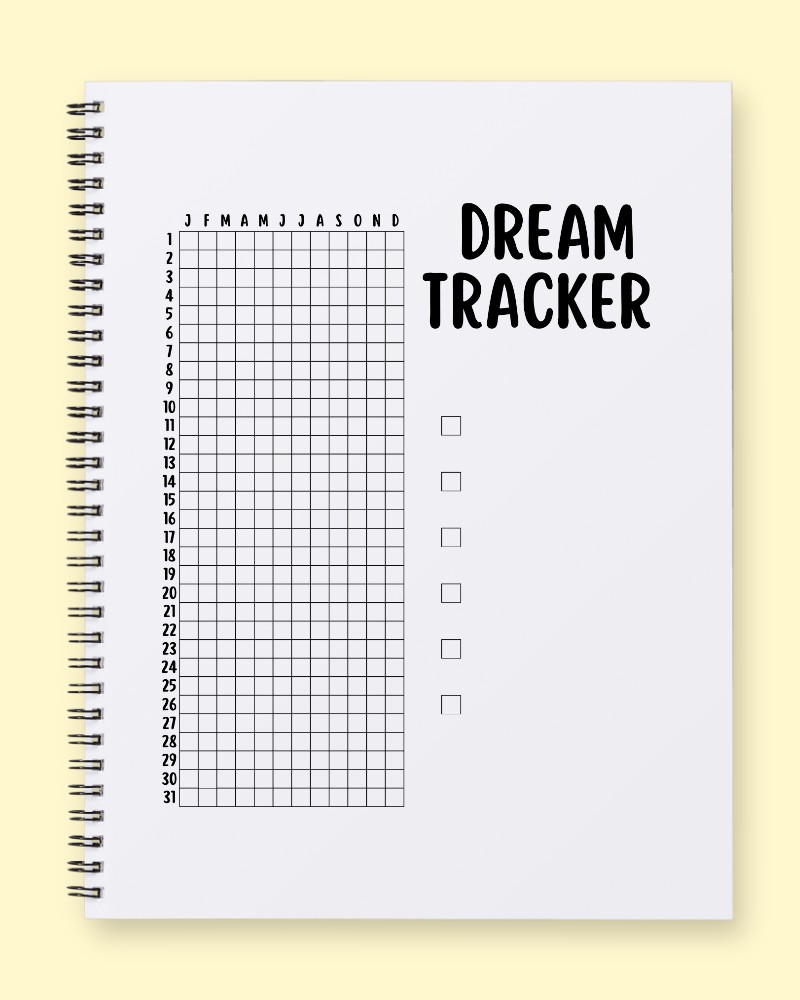
Unlock Your Inner World: The Power of a Dedicated Dream Tracker
Dreams are often considered a window into our subconscious, offering profound insights into our desires, fears, and untapped potential. Yet, many vivid dream experiences fade upon waking, lost to the haze of morning. This dedicated Dream Tracker journal page, with its unique calendar grid and focused checkboxes, transforms fleeting nighttime narratives into actionable data for self-discovery and personal growth. Designed for consistent, year-long use, it's more than just a journal; it's a tool for mastering your inner landscape.
1. The Psychological Benefits of This Specific Tracker Layout
The genius of this Dream Tracker lies in its highly visual and structured design, offering distinct psychological advantages over generic journaling. The prominent 1-31 day rows paired with the J-D (January-December) month columns create an intuitive, at-a-glance annual overview. This pattern recognition is a powerful psychological tool. Users can quickly identify periods of increased dream recall, recurring themes linked to specific months, or even correlations with daily routines or life events. For instance, you might notice a cluster of vivid dreams in March or a recurring symbol appearing around the 15th of each month. This visual data helps to demystify the seemingly chaotic world of dreams, making the subconscious feel more accessible and predictable.
Furthermore, the act of physically marking a square each day – whether with a simple 'X' for "dream recalled" or a specific symbol for a lucid dream – fosters habit formation and mindfulness. This small daily ritual encourages consistent engagement with your dream life, strengthening your dream recall muscles over time. It transforms a passive experience into an active pursuit of self-knowledge. The six dedicated checkboxes on the right provide specific tracking opportunities, allowing you to categorize significant dream elements like "Lucid Dream Attempt," "Recurring Symbol Noted," or "Emotion Analyzed." This targeted approach enhances self-awareness by directing your reflection to key aspects of your dream experiences, aiding in deeper dream interpretation and overall mental well-being. By making dream tracking a systematic part of your routine, you cultivate a richer connection to your inner self and harness the power of your nocturnal narratives.
2. A Step-by-Step Guide on How to Fill It Out Effectively
Utilizing this Dream Tracker effectively requires a simple, consistent approach tailored to its unique grid layout and checkboxes.
- Morning Ritual: Place your journal by your bedside. Upon waking, before you even get out of bed, immediately try to recall your dreams. The first few moments are crucial for memory retention.
- Date Your Entry: Locate the current day (1-31) in the left-hand column and the current month (J, F, M, A, M, J, J, A, S, O, N, D) in the top row.
- Mark Your Dream Recall: The squares are small, so instead of writing lengthy descriptions, use a simple code or symbol within the square to denote dream activity.
- X: Dream recalled (any dream).
- L: Lucid dream (you were aware you were dreaming).
- N: Nightmare.
- V: Very vivid dream.
- S: Significant dream (one you feel holds important meaning).
- Leave the square blank if no dream was recalled or you don't remember.
- Utilize the Checkboxes: Assign specific meanings to the six checkboxes on the right side of the page. Write these meanings subtly next to each box or on a sticky note for reference. Examples:
- [ ] Lucid Dream Attempt Successful
- [ ] Recurring Symbol Noted
- [ ] Emotion Analyzed (e.g., anxiety, joy)
- [ ] Actionable Insight Gained
- [ ] Shared Dream (if applicable)
- [ ] Dream Interpreted Check the boxes that apply to the dream you've just recalled.
- Expand in a Companion Journal (Optional but Recommended): Since the grid squares are compact, use a separate journaling space (perhaps the back of this page, or a dedicated notebook) for detailed dream interpretation and narratives. Reference the date from your tracker to connect specific grid entries to your longer reflections.
- Monthly/Quarterly Review: Regularly review your grid. Look for trends, patterns, and correlations. Are certain types of dreams more common in particular months? Do your 'L' (lucid dream) marks cluster after periods of specific intention? This systematic review is key to unlocking deeper subconscious insights.
3. Three Daily Prompts That Pair Well with This Layout
To maximize your interaction with this Dream Tracker, integrate daily prompts that encourage deeper reflection and connection with your dream experiences, leveraging the visual feedback provided by the layout.
-
"What was the most striking image or emotion from your dream last night? Mark your grid square with a symbol reflecting its nature (X, L, N, V, S)." This prompt directly engages you in dream recall and encourages immediate classification, preparing you to mark the specific day and month square. It helps you focus on the most impactful part of the dream, even if the full narrative is elusive. The act of choosing a symbol forces a quick assessment of the dream's quality or significance.
-
"Did your dream contain any recurring symbols, themes, or scenarios you've noticed previously? If so, check the 'Recurring Symbol Noted' checkbox and consider what might be prompting its re-emergence." This prompt encourages you to look for patterns not just in your grid (e.g., specific dates or months), but within the content of your dreams themselves. By checking a dedicated box, you create a tangible record of these important repetitions, which are often signposts from your subconscious mind for personal growth or unresolved issues.
-
"How did your dream (or lack of dream recall) influence your waking mood, thoughts, or plans for today? Check the 'Emotion Analyzed' box if you processed a strong feeling from your dream." This prompt bridges the gap between your nocturnal world and your waking life, fostering holistic self-discovery. It pushes beyond mere recall, encouraging you to consider the tangible impact of your dreams on your daily experience. It also acknowledges days where recall is difficult, prompting reflection on potential factors influencing sleep quality or dream memory, enhancing your overall sleep diary insights.
By consistently engaging with this Dream Tracker and these tailored prompts, you embark on a fascinating journey into your inner world, transforming your nighttime experiences into a powerful catalyst for mindfulness, self-awareness, and profound personal growth.