
How to Use a Money Journal to Stick to Your Savings Goals
How to Stay Consistent With Your Savings Plan Using Journaling
The Hidden Struggles of Saving Money
It’s a cycle many of us know all too well: the New Year excitement of a fresh budget, followed by three weeks of perfection, and then… silence. Most people assume they fail at saving because they lack a high enough income or a "better" app. In reality, the root cause is often behavioral and emotional. Consistency isn't about the math; it's about the mindset. This is where the simple act of journaling transforms from a hobby into a financial powerhouse.
Physical Journaling vs. Automated Budgeting Apps
We live in an era of seamless automation. While apps are great for data, they often remove the very thing needed for behavioral change: friction. When a transaction is automatically categorized, your brain barely registers it. The physical friction of picking up a pen and writing down a purchase forces a moment of mindfulness. It requires you to process the spending habit, creating a psychological bridge between your bank account and your awareness.
Conquering Emotional Spending With a First Aid Kit
Stress, sadness, or even extreme boredom—these are the real architects of impulse buys. To combat this, I recommend creating an "Emotional First Aid Kit" directly in your journal. List five free coping mechanisms that actually work for you: a specific tea, a 10-minute walk, calling a designated friend, or a quick stretching routine. By inserting a mindful pause and journaling the emotion felt during the urge to shop, you begin to identify and break the habit loop that drains your savings.
Overcoming Categorization Paralysis
If you've ever stopped tracking because you didn't know whether a coffee at a bookstore counts as "Entertainment" or "Dining Out," you've experienced categorization paralysis. This decision fatigue is a major roadblock, especially for those with ADHD. The solution? Financial Brain Dumps. Use a pressure-free space in your journal to log expenses quickly without worrying about categories. You can always organize them later when your mental energy is restored.
Visual Trackers and Micro-Savings Challenges
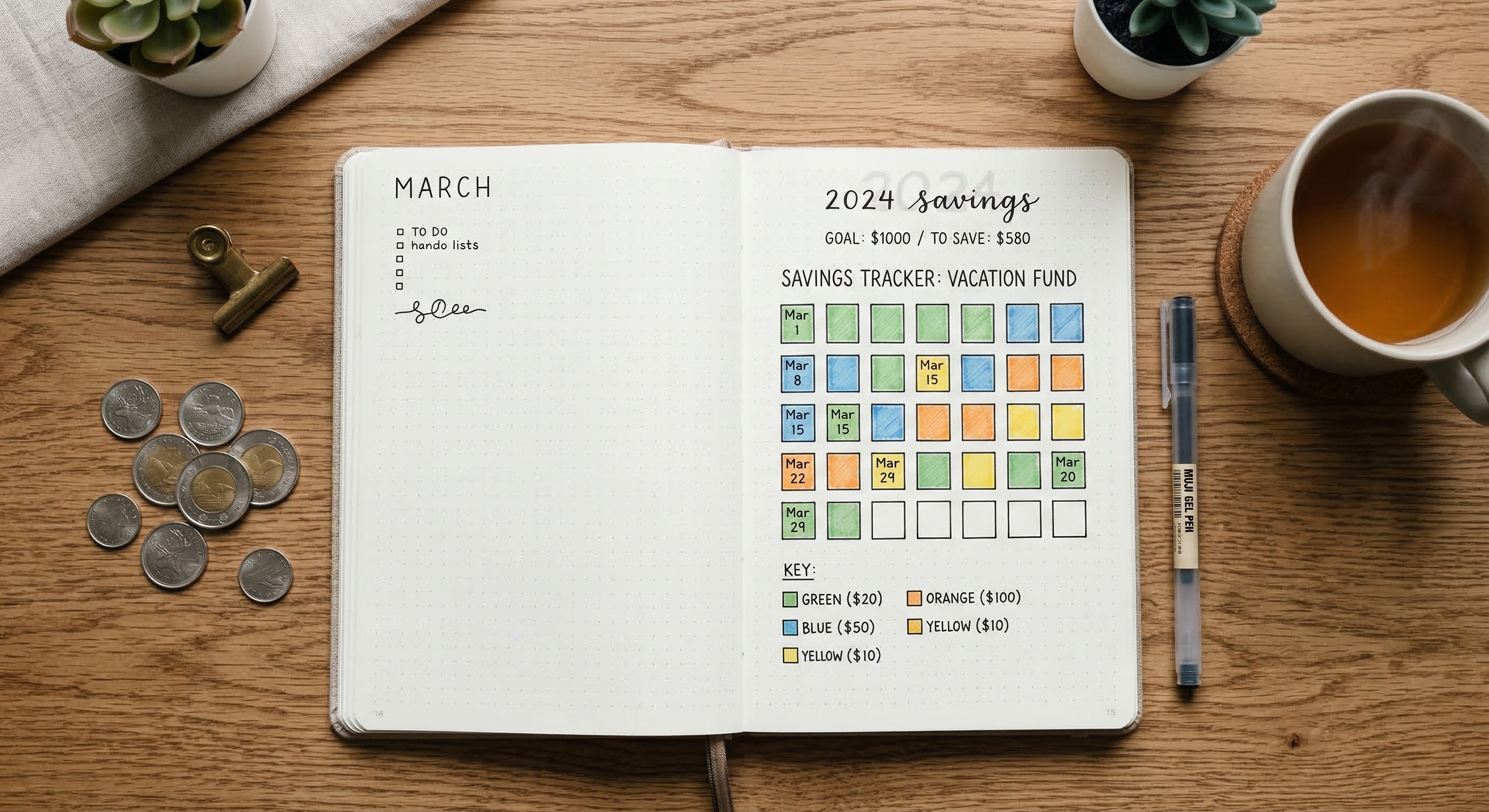
Our brains crave visual rewards. Instead of looking at a digital spreadsheet, create a "Goals Pyramid" or a "Year in Pixels" daily grid for savings milestones. Micro-challenges—like a "No-Spend Weekend" tracker or a "Loose Change" challenge—turn saving into a game. These small, achievable wins reinforce a positive financial identity, making you feel like a "saver" rather than someone "trying to save."
Beating Perfectionism and Giving Yourself Grace
The number one reason people quit journaling is a blank page. If you miss three days, the perfectionist brain says the whole system is ruined. This "migration fatigue" is the enemy of progress. Give yourself grace. The journal is a tool for personal growth, not an art museum. If you miss a week, just turn the page and pick up today. Your future self won't care about the empty Tuesday in March; they'll care that you kept going.
Frequently Asked Journaling Questions
- What if I miss logging several days? Give yourself grace and pick up exactly where you left off. The goal is long-term awareness, not a perfect streak.
- Why a journal instead of an app? Journaling offers a level of mindfulness and psychological processing that "set-it-and-forget-it" apps cannot provide.
- How can I categorize without feeling overwhelmed? Use broad categories initially (e.g., Needs, Wants, Savings) and refine them only when you feel comfortable.
- What are the best beginner layouts? Minimalist, low-effort pages are best. A simple date and a list of expenditures is more than enough to start.
- How do I stop emotional shopping through journaling? Always journal the emotion and the trigger behind the impulse. Seeing the pattern written down makes it easier to disrupt next time.
Elevate Your Savings Journey Today
There is an undeniable clarity that comes from putting pen to paper. By utilizing physical notebooks for your financial tracking, you choose mindfulness over mindless spending. To truly upgrade your system, consider using PixelDownloadables templates designed specifically for financial brain dumps, visual goal trackers, and emotional first aid kits. Start today, and build the financial freedom you deserve.