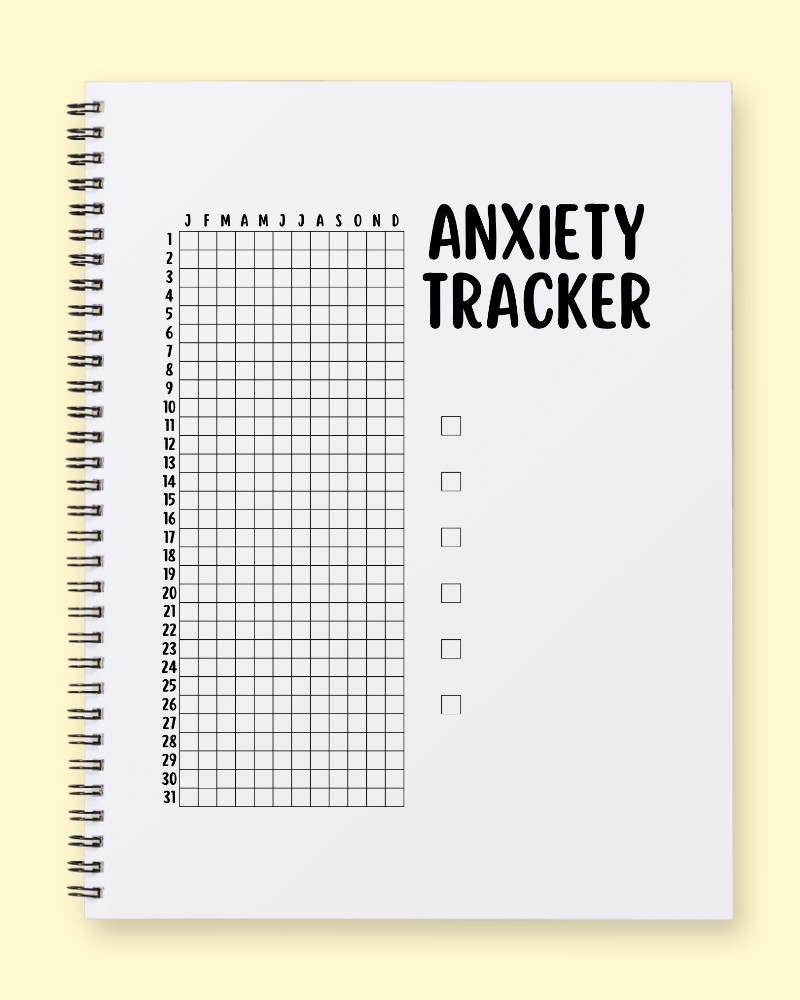
Unlock Inner Calm: Your Comprehensive Monthly Anxiety Tracker Journal Page
In today's fast-paced world, managing anxiety is a crucial aspect of overall well-being. This unique journal page template, designed with a clear 31-day by 12-month grid and integrated daily reflection points, offers a powerful tool for self-awareness and emotional regulation. Far beyond a simple planner, it's a dedicated companion for anyone seeking to understand, track, and ultimately soothe their anxious thoughts. Let's delve into how this specific layout can transform your mental health journey.
1. The Psychological Benefits of This Specific Tracker Layout
This anxiety tracker's distinctive grid, spanning all 31 days of the month across 12 columns for each month of the year (J-D), provides an unparalleled longitudinal view of your anxiety patterns. Unlike daily journals that offer snapshot insights, this layout empowers you to observe trends, triggers, and the effectiveness of coping mechanisms over weeks, months, and even a full year. Psychologically, this visual data stream fosters a sense of control and predictability over what often feels chaotic.
- Pattern Recognition & Early Intervention: By color-coding or marking each day's square based on anxiety levels or types, you can quickly identify monthly cycles, seasonal shifts, or specific events that correlate with increased anxiety. This proactive insight allows for early intervention and targeted coping strategies.
- Reduced Overwhelm & Empowerment: Breaking down the vast concept of "anxiety" into daily, manageable entries reduces the feeling of being overwhelmed. The act of tracking itself, transforming abstract feelings into concrete data points, is empowering. It shifts you from being a passive recipient of anxiety to an active observer and manager.
- Mindful Reflection & Self-Compassion: Daily engagement with the tracker encourages a moment of mindful reflection. What contributed to today's anxiety? What helped? This consistent self-inquiry builds emotional intelligence and fosters self-compassion as you learn to understand and respond to your needs without judgment.
- Reinforcement of Positive Habits: The additional six checkboxes on the right side of the page serve as versatile markers for daily habits, coping strategies employed, or specific anxiety types experienced. Utilizing these, you can visually reinforce positive actions, track their frequency, and correlate them with shifts in anxiety levels, thereby building healthier routines.
2. A Step-by-Step Guide to Effectively Fill Out Your Tracker
Harnessing the full potential of this anxiety tracker is simple when approached systematically.
Step 1: Understand Your Layout: The core of this page is the 31-row vertical axis (days 1-31) and the 12-column horizontal axis, clearly labeled J, F, M, A, M, J, J, A, S, O, N, D for each month of the year. This means you will use one row for the current day across the entire year. The six unlabelled checkboxes on the right are for daily custom tracking.
Step 2: Define Your Tracking System for the Grid: Before you begin, decide what each square in the main grid will represent. A highly effective method is color-coding for anxiety intensity:
- Light Color (e.g., pale yellow): No anxiety / Feeling calm.
- Medium Color (e.g., light orange): Mild anxiety / Underlying worry.
- Darker Color (e.g., bright orange): Moderate anxiety / Noticeable discomfort.
- Bold Color (e.g., red): Severe anxiety / Panic attack / Significant distress. Alternatively, use symbols for types of anxiety (e.g., 'P' for panic, 'S' for social anxiety) or simply shade the square based on a 1-5 scale. Create a small legend at the bottom or on a separate page.
Step 3: Utilize the Daily Checkboxes: The six checkboxes on the right are your flexible daily insights. Assign a meaning to each:
- Checkbox 1: "Used coping strategy (e.g., deep breathing, meditation)"
- Checkbox 2: "Experienced a panic attack"
- Checkbox 3: "Slept well (7+ hours)"
- Checkbox 4: "Engaged in physical activity"
- Checkbox 5: "Socialized today"
- Checkbox 6: "Felt overwhelming sadness/low mood" These are examples; customize them to track what's most relevant to your anxiety experience.
Step 4: Consistent Daily Entry: At the end of each day, take a few minutes to reflect. Locate the current day's row and the current month's column. Fill in the square according to your defined system. Then, check off any relevant boxes on the right. Consistency is key for accurate pattern identification.
Step 5: Monthly & Annual Review: At the end of each month, pause and look at your completed column. What patterns emerge? Did certain days of the week consistently show higher anxiety? Did you use your coping strategies more often? At the end of the year, review the entire grid horizontally to spot yearly trends or seasonal impacts. Use these insights to adjust your self-care routine and seek professional help if needed.
3. Three Daily Prompts That Pair Well with This Layout
To deepen your reflection and get the most out of your tracker, consider adding these prompts to your daily routine, perhaps in a separate journal or a small notes section alongside your tracker.
-
"What specific thought or event today contributed most to my feelings of anxiety, and what was my initial reaction?"
- Why it pairs well: This prompt helps pinpoint immediate triggers, allowing you to accurately mark your anxiety level in the grid and connect it to a root cause. Over time, you'll see if the same triggers appear repeatedly.
-
"What proactive step or coping mechanism did I use today to manage or prevent anxiety, and how effective was it?"
- Why it pairs well: This encourages mindful action and allows you to mark a corresponding checkbox (e.g., "Used coping strategy"). It helps you identify which tools in your anxiety toolkit are truly working for you.
-
"Despite any anxious moments, what is one small moment of peace, joy, or accomplishment I experienced today?"
- Why it pairs well: This prompt balances the focus on anxiety with gratitude and positive reinforcement. Even on high-anxiety days marked darkly in your grid, it encourages you to seek out and acknowledge moments of calm, fostering a more holistic and compassionate self-assessment.
By integrating this intuitive anxiety tracker into your daily life, you're not just recording data; you're building a powerful visual narrative of your emotional landscape, paving the way for greater self-understanding, resilience, and lasting inner peace.