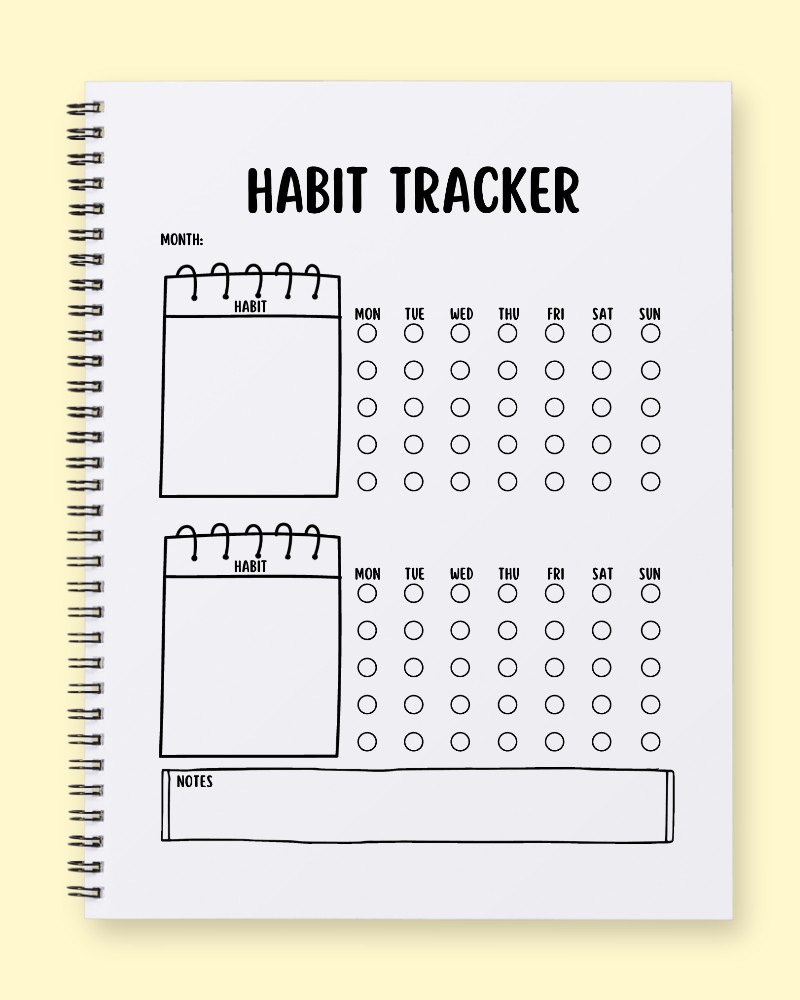
This minimalist yet powerful journal page offers a structured approach to cultivating new habits and fostering consistent personal growth. Designed for clarity and ease of use, it serves as an indispensable tool for anyone committed to meaningful self-improvement and developing a more intentional daily routine. This printable habit tracker not only helps you log your progress but also encourages deeper reflection, transforming simple checkboxes into stepping stones toward lasting behavioral change. Embrace this daily routine organizer to unlock your full potential and achieve your personal development goals with focused intention.
1. The Psychological Benefits of This Specific Tracker Layout
The design of this habit tracker is intentionally crafted to tap into several psychological principles that boost motivation and adherence. Firstly, the inclusion of two distinct "HABIT" tracking blocks encourages focused goal setting. Rather than overwhelming users with a long list, it promotes concentration on 1-2 key behaviors per month, a strategy known to increase success rates. This narrow focus reduces cognitive load and makes starting new habits less daunting.
The prominent "MONTH" field at the top serves as a powerful psychological anchor, framing your efforts within a clear monthly cycle. This promotes a sense of commitment and allows for regular review and reset points, preventing burnout and encouraging a fresh start if a streak is broken. The consistent Monday-Sunday grid provides a visual representation of the week, reinforcing routine and structure. Each completed circle offers instant visual gratification, triggering a dopamine release that reinforces the positive behavior—a fundamental principle of operant conditioning. Seeing a growing streak builds momentum and a sense of accomplishment, strengthening your resolve.
Crucially, the dedicated "NOTES" section transforms this from a mere logging tool into a potent self-reflection and mindfulness journal. This space encourages metacognition, prompting you to analyze why you succeeded or struggled, identify triggers, and strategize for future improvement. This reflective component is vital for sustainable behavior change, helping you understand your patterns, adapt your approach, and foster genuine personal growth. It shifts the focus from simple compliance to genuine self-awareness and learning.
2. A Step-by-Step Guide on How to Fill It Out Effectively
Utilizing this habit tracker to its fullest potential involves more than just checking boxes; it’s about strategic engagement. Follow these steps for an optimized tracking experience:
Step 1: Set Your Monthly Framework: Begin by clearly writing the current month in the "MONTH:" field. This establishes your tracking period and provides a mental start and end point for your efforts.
Step 2: Define Your Key Habits (Be Specific!): In the two "HABIT" boxes, write down the specific behaviors you wish to track. Avoid vague terms. Instead of "Eat healthy," write "Eat 5 servings of vegetables." Instead of "Exercise," write "Go for a 30-minute walk." Limiting yourself to two main habits per month maximizes your focus and significantly increases your chances of success. Choose habits that are measurable and actionable.
Step 3: Daily Tracking and Reinforcement: Each day, for each habit you complete, mark the corresponding circle in the grid. You can use a simple "X," a checkmark, or color it in. The act of physically marking the circle reinforces the habit. If you miss a day, leave it blank or use a different mark (e.g., a dot) to indicate a miss without dwelling on failure. The goal is consistency, not perfection.
Step 4: Leverage the "NOTES" Section for Reflection: This section is your secret weapon. Throughout the month, or at the end of each week, use it to jot down observations. Did you face a particular challenge? What made it easy to stick to your habit today? How did you feel after completing a habit? What external factors influenced your success or failure? This qualitative data provides invaluable insights beyond mere quantitative tracking, helping you understand the underlying dynamics of your behavior change journey.
Step 5: Monthly Review and Iteration: At the end of the month, take time to review your completed tracker. Look at your streaks, identify patterns, and read through your notes. What worked well? What didn't? What did you learn about yourself? Use these insights to inform your habit choices and strategies for the next month, ensuring continuous improvement and effective self-improvement.
3. Three Daily Prompts That Pair Well with This Layout
To deepen your engagement with this habit tracker and foster a more reflective practice, integrate these specific prompts into your daily or weekly routine, especially using the "NOTES" section.
- "Looking at my completed circles, what was one small action I took today that truly moved the needle on a habit, and how can I replicate that tomorrow?" This prompt encourages you to identify specific, positive triggers or strategies that led to success. It shifts focus from merely completing a task to understanding the process of completion, making your habit-building more intentional and replicable.
- "If I missed a habit today, what was the primary obstacle, and what's one micro-adjustment I can make to remove that obstacle for tomorrow?" This prompt is about proactive problem-solving without judgment. It prompts you to analyze failures as learning opportunities and brainstorm tangible, small steps to overcome challenges, rather than simply feeling defeated. This fosters resilience and adaptability.
- "How did sticking to (or missing) my habits today make me feel, and what does that tell me about my true priorities or energy levels right now?" This emotional check-in connects your actions to your inner state. Understanding the emotional impact of your habits (e.g., pride, exhaustion, regret) provides deeper insight into your motivations and potential areas for self-care or adjustment, ensuring your habit journey aligns with your overall well-being.