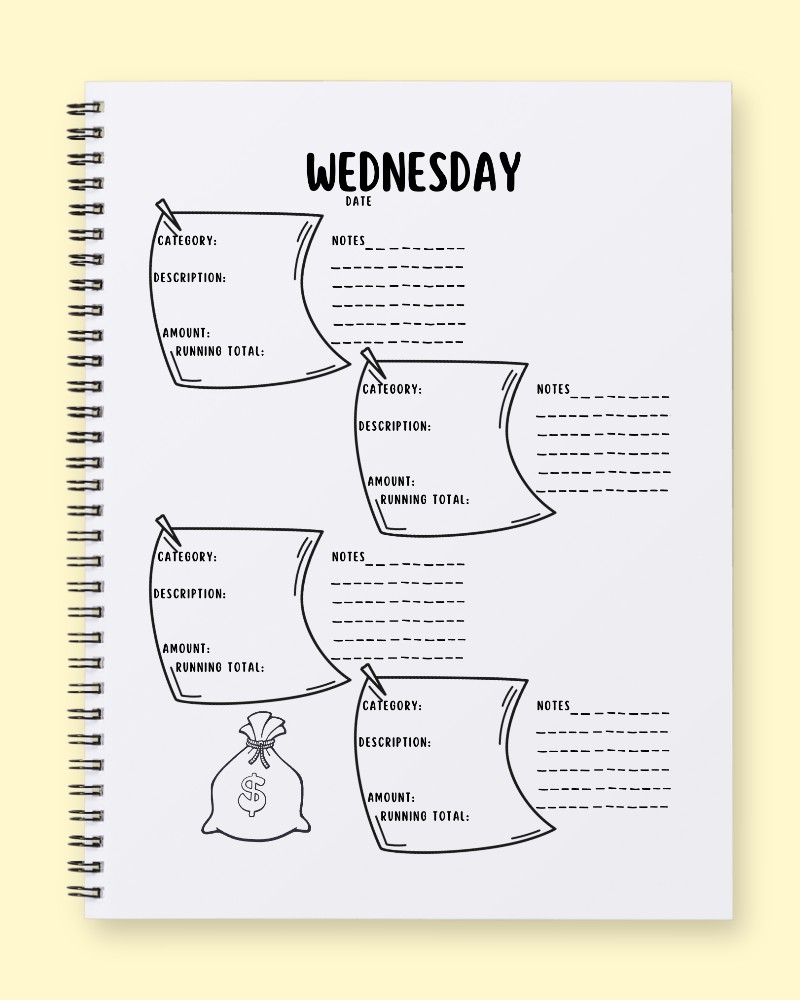
This elegantly designed spending tracker offers more than just a place to log numbers; it's a powerful tool for cultivating financial wellness and mindfulness. Perfect for daily use, this budget journal helps you dissect your daily expenses and foster a deeper understanding of your money habits. Whether you're aiming to save for a big goal, reduce debt, or simply gain clarity on your cash flow, this financial planner template provides the structure and visual cues to make the process engaging and effective.
The Psychological Benefits of Tracking Your Spending with This Layout
The unique visual appeal of this template offers significant psychological advantages over a plain ledger. The distinctive "scrolled paper" design for each entry, anchored by a "paper clip," immediately breaks down the often overwhelming task of money management into manageable, bite-sized components. This visual segmentation reduces cognitive load, making the act of logging expenses less daunting and more inviting. Each entry feels like a complete thought, rather than just another line item.
The prominent "RUNNING TOTAL" feature provides instant, real-time feedback, a powerful psychological lever. Seeing your remaining budget or current balance after each transaction fosters immediate awareness and accountability, helping you make more conscious spending decisions throughout the day. This isn't just about looking back; it's about making informed choices in the present.
Furthermore, the dedicated "NOTES" section transforms this expense tracker from a mere accounting tool into a personal financial diary. This space encourages qualitative reflection – allowing you to explore the emotions, triggers, and values behind your purchases. This act of journaling alongside numbers can uncover deep-seated financial patterns, reduce anxiety by bringing clarity, and enhance your sense of control over your finances. The final "money bag" illustration acts as a subtle, positive reinforcement of your saving goals, providing a consistent visual reminder of your long-term financial goals and wealth accumulation.
Your Step-by-Step Guide to Effective Spending Tracking
Leveraging this printable planner for your daily expenses is straightforward and highly effective. Here’s how to maximize its potential:
- Date It Right: Begin by filling in the full date next to "DATE" below "WEDNESDAY." This grounds your tracking in time and establishes a clear record.
- Categorize Smartly: For each of the four distinct tracking modules, start with "CATEGORY." Be specific and consistent: "Groceries," "Transport," "Dining Out," "Utilities," "Entertainment." This consistency is key for later analysis of where your money truly goes.
- Describe in Detail: Under "DESCRIPTION," provide a brief but informative detail of the item or service. For "Groceries," it might be "Weekly shop at FreshMart," or for "Transport," "Morning commute bus fare." This context is invaluable when reviewing your spending.
- Input the Amount: Accurately enter the numerical value of your transaction under "AMOUNT." Precision, including cents, ensures your totals are correct.
- Maintain Your Running Total: This is the heart of real-time financial mindfulness. After each expense, update your "RUNNING TOTAL." This figure should represent your current remaining balance or budget for the period. This immediate feedback empowers you to adjust your spending behavior on the fly.
- Utilize the Notes Section: Do not skip the "NOTES" section. This is your qualitative space. Reflect: Why did you make this purchase? Was it planned? How did it make you feel? What alternatives could you have considered? This transforms logging into learning.
- Embrace the Money Bag: As you fill out your day’s transactions, let the "money bag" graphic at the bottom serve as a constant, positive reminder of your broader financial aspirations – be it saving for a vacation, investing, or achieving financial independence. It’s a visual anchor for your financial journey.
Three Daily Prompts to Maximize Your Financial Reflection
To deepen your engagement with this budget journal beyond simple logging, consider these prompts for your "NOTES" sections:
- "Reflect on today's spending. Was there one purchase that truly brought you genuine joy or value? What made it worthwhile, and how can you prioritize more such spending?" (This prompt encourages mindful consumption and helps identify spending aligned with your values.)
- "Looking at your running total, how does today's financial picture align with your short-term financial goals? What's one small win you can celebrate, or one area you could gently adjust tomorrow?" (This connects daily actions to bigger objectives, fostering both self-awareness and positive reinforcement.)
- "Consider one spontaneous purchase made today. What prompted it, and what feeling did it satisfy? Is there a non-monetary way you could fulfill that same need in the future?" (This delves into the psychological drivers of impulse spending, promoting healthier coping mechanisms.)
By consistently utilizing this financial planner, you’re not just tracking money; you're building a stronger, more mindful relationship with your finances, one day at a time.