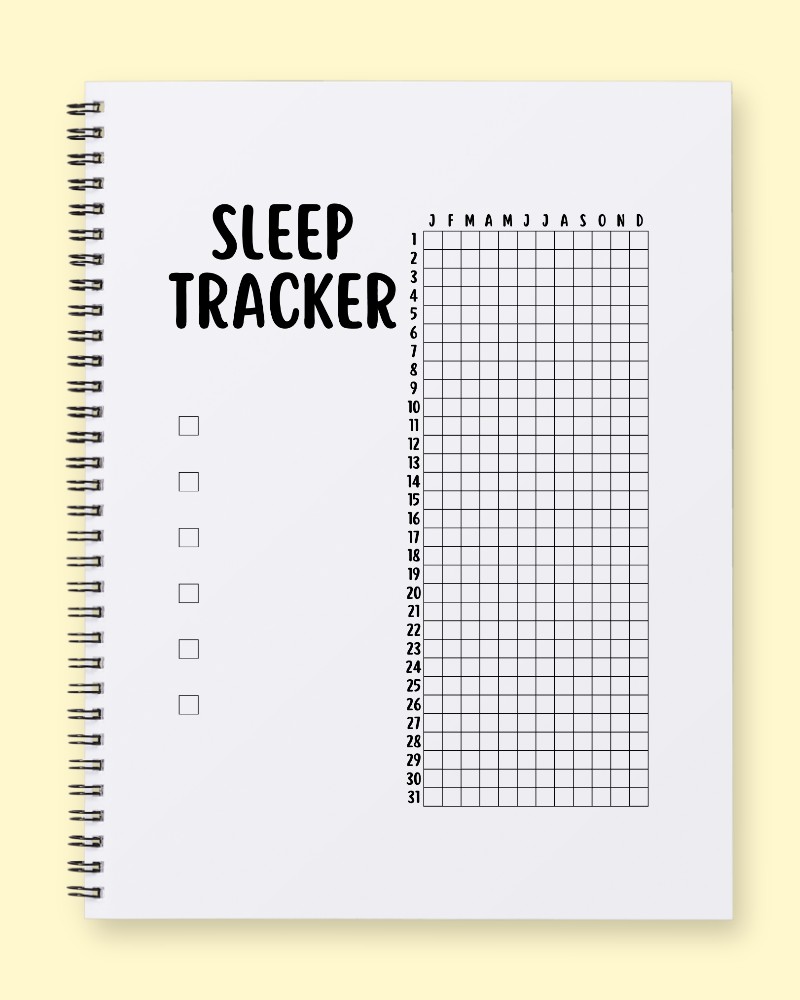
Welcome to your ultimate companion for a journey to better rest and enhanced well-being: the Sleep Tracker Journal page. In a world that often glorifies being busy, prioritizing quality sleep has become a radical act of self-care. This thoughtfully designed tracker offers a simple yet powerful tool to understand, optimize, and celebrate your sleep patterns throughout the entire year. Move beyond vague notions of "good" or "bad" sleep and gain clear, actionable insights into your nightly rhythms. Whether you're aiming for more consistent bedtimes, longer hours of rest, or simply want to observe how different factors influence your sleep quality, this sleep tracker is your visual guide to unlocking a more rested and vibrant you.
1. The Psychological Benefits of Using This Specific Tracker
This particular sleep tracker’s grid-based, year-long format offers distinct psychological advantages for anyone looking to improve their sleep habits. Firstly, the visual progression is a powerful motivator. Seeing a blank grid transform into a tapestry of marked squares provides an immediate sense of accomplishment and consistency. The "J F M A M J J A S O N D" monthly columns allow for a quick, at-a-glance review of your sleep performance over weeks and months, highlighting seasonal trends or periods of exceptional (or poor) rest. This visual feedback loop intrinsically reinforces positive sleep habits, making the act of tracking itself part of your self-care routine.
Secondly, the simple daily marking system (rows 1-31) reduces cognitive load, preventing the overwhelm often associated with detailed journaling. This simplicity makes habit formation easier; you're more likely to stick with a system that doesn't feel like a chore. By consistently marking your sleep each day, you cultivate mindfulness around your nightly routine, fostering a deeper awareness of how your choices throughout the day impact your sleep quality. The left-hand checkboxes serve as powerful prompts for additional habits or observations, allowing for deeper self-reflection without cluttering the main sleep grid. Perhaps one box tracks "no screen time before bed," while another marks "exercised today." This layered tracking supports a holistic view of your wellness journey, helping you identify correlations between various daily activities and your sleep patterns. Ultimately, this tracker transforms an often-ignored aspect of health into an engaging, empowering, and easily digestible pursuit, leading to reduced stress and enhanced self-improvement.
2. A Step-by-Step Guide on How to Fill It Out Effectively
Utilizing this sleep tracker effectively is straightforward, designed to integrate seamlessly into your daily routine. Here’s how to make the most of its unique layout:
- Define Your Core Metric: Before you begin, decide what specific aspect of your sleep you want to track daily. Will you mark if you achieved 7-8 hours of sleep? If you woke up feeling refreshed? If you went to bed by a certain time? Choose one clear, consistent metric.
- Choose Your Marking System: Once your metric is defined, decide how you'll mark the squares. A simple "X" or checkmark works well for "achieved goal." For more nuanced tracking, you could color the square green for "excellent sleep," yellow for "average," and red for "poor," or simply fill it in completely for a successful night. The key is consistency.
- Start Today: Locate the current month’s column (J for January, F for February, etc.) and today's numerical date row (1-31). For example, if it's January 15th, find the 'J' column and the '15' row.
- Daily Reflection and Mark: Each morning, after waking up, take a moment to reflect on your previous night's sleep. Based on your chosen metric, mark the corresponding square in the grid. This morning ritual reinforces sleep awareness.
- Utilize the Left Checkboxes: The additional blank checkboxes on the left are a fantastic feature for tracking complementary habits or variables. Dedicate each box to a specific factor that might influence your sleep. Examples include:
- "No caffeine after 2 PM"
- "Meditated before bed"
- "Completed daily exercise"
- "Drank X glasses of water"
- "Screen-free hour before sleep" Mark these daily as appropriate. Over time, these checks can reveal powerful correlations with your sleep quality and patterns in the main grid.
- Monthly and Yearly Review: At the end of each month, review the entire column. What patterns emerge? Are there specific days of the month (e.g., around stressful deadlines) where your sleep suffers? After several months, begin to look horizontally across the '1' row, then the '2' row, and so on, to see if specific dates across different months have recurring sleep patterns. This holistic view is crucial for identifying long-term sleep habits and areas for improvement.
3. Three Daily Prompts That Pair Well With This Layout
To deepen your understanding and enhance your sleep routine without adding extensive writing, these three short, impactful prompts are designed to complement the visual tracking system perfectly:
- "Before Sleep Reflection: What is one small success or moment of gratitude from today that I can bring into my rest tonight?" (This prompt encourages a positive mindset before bed, helping to calm the mind and reduce pre-sleep anxiety. It focuses on ending the day with positive thoughts, which can significantly impact sleep quality.)
- "Morning Insight: How does my chosen sleep metric (e.g., hours/refreshment) from last night correlate with my focus and energy for the first two hours of today?" (This prompt directly links your tracked sleep performance to your immediate daily productivity and well-being. It helps you recognize the real-time impact of good or poor sleep, reinforcing the importance of consistent sleep habits.)
- "Sleep Prep Goal: What is one deliberate, gentle action I will take in the next few hours to prepare my body and mind for tonight’s sleep?" (This forward-looking prompt encourages proactive engagement with your sleep routine. It could involve dimming lights, avoiding heavy meals, or a short mindfulness exercise. It turns preparing for sleep into an intentional, self-care practice.)
By integrating these prompts, this sleep tracker page transcends mere data logging, becoming a powerful tool for self-awareness, stress management, and consistent self-improvement on your journey to better sleep and a healthier lifestyle.