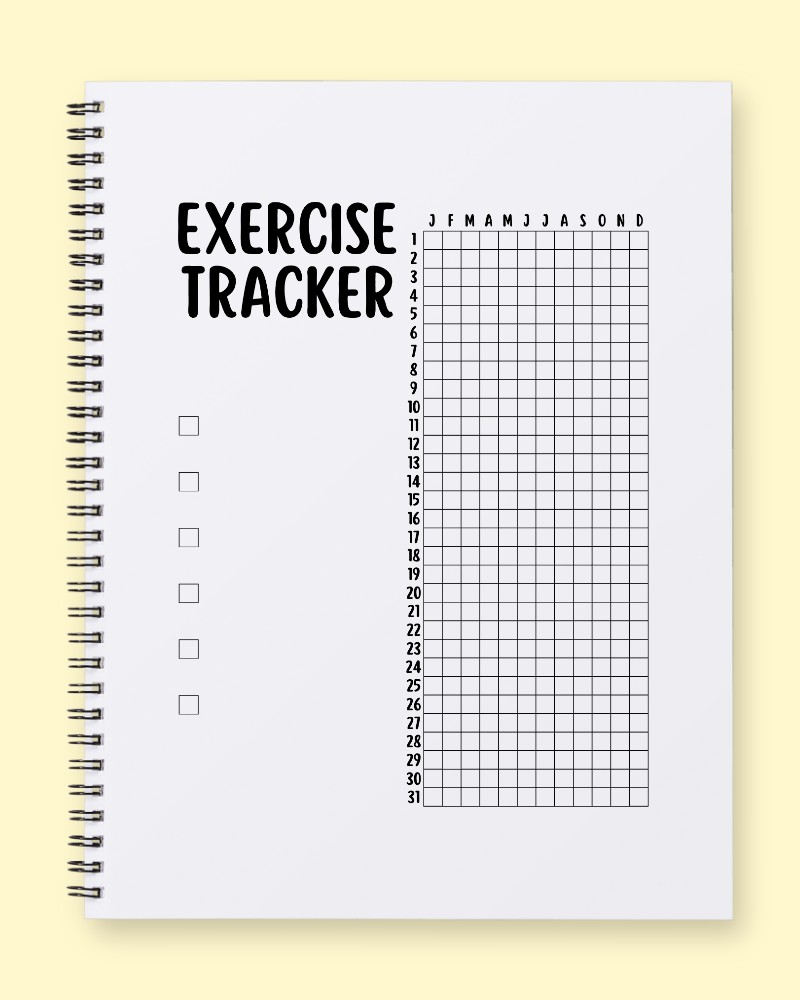
Tracking your fitness journey is more than just logging workouts; it's a powerful tool for self-improvement, motivation, and achieving long-term health goals. The "EXERCISE TRACKER" journal page provided offers a unique, visually engaging way to monitor your progress throughout an entire year. With its clear monthly and daily grid, coupled with additional checkboxes for specific targets, this layout is designed to transform your intentions into actionable, sustainable habits. Dive into how this specific exercise tracker can empower you to stay consistent, celebrate your milestones, and cultivate a deeper understanding of your physical well-being.
1. The Psychological Benefits of Using This Specific Tracker/Planner
This particular "EXERCISE TRACKER" journal page, with its comprehensive 12-month grid and 31 daily rows, is a masterclass in psychological reinforcement for habit formation. Firstly, its yearly perspective is profoundly beneficial. Instead of focusing solely on daily wins or losses, you gain a panoramic view of your entire fitness year. Missing a single day, or even a week, doesn't derail your entire journey; it becomes a minor blip in a larger, consistent pattern. This visual representation combats the "all-or-nothing" mentality, fostering resilience and encouraging you to get back on track rather than giving up. Seeing a growing chain of marked boxes across months serves as a powerful visual reward system, triggering dopamine release and reinforcing the positive behavior. It transforms an abstract goal into a tangible record of effort and progress.
The inclusion of six dedicated checkboxes on the left further enhances its psychological impact. These aren't just arbitrary squares; they allow for the setting of specific, measurable, and often multi-faceted goals. For example, one box could be for "Strength Training Days," another for "Cardio Sessions," and perhaps one for "Hydration Goals." Assigning clear objectives to these checkboxes provides additional layers of accountability and allows you to track different dimensions of your wellness journey simultaneously. This multi-metric approach ensures a holistic view of your health, preventing burnout from focusing on a single type of exercise. It promotes mindfulness and intentionality, as the act of reflecting and marking your progress daily requires conscious engagement with your fitness habits. Ultimately, this specific layout turns your fitness journey into an empowering visual narrative, proving that small, consistent steps lead to significant, sustainable change.
2. A Step-by-Step Guide on How to Fill It Out Effectively
To maximize the benefits of your "EXERCISE TRACKER," follow these steps, tailored specifically to its layout:
- Define Your "Exercise" Criteria: Before you begin, clearly decide what constitutes an "exercise day" for you. Is it 30 minutes of intentional movement? A structured workout session? 10,000 steps? Write this definition somewhere on the page (perhaps in the margin or on an adjacent page) to ensure consistency.
- Personalize the Checkboxes: Utilize the six empty checkboxes on the left. Label each with a specific fitness goal or habit you want to track throughout the year. Examples include:
- "Strength Training Sessions"
- "Cardio Workouts"
- "Flexibility/Yoga Practice"
- "Mindful Movement (e.g., long walk)"
- "Hydration Goal Met (e.g., 8 glasses of water)"
- "New Workout Attempted" This allows for multi-dimensional tracking beyond just "did I exercise?"
- Choose Your Marking System: Decide how you'll mark the main grid. A simple "X" is effective, but you could also use:
- Different colored pens/highlighters for different types of exercise (e.g., blue for cardio, green for strength, yellow for yoga).
- Specific symbols within the box (e.g., 'C' for cardio, 'S' for strength).
- A solid fill for any exercise and a small dot in the corner if a specific checkbox goal was met. Consistency is key, so stick to your chosen system.
- Daily Log and Check-in: At the end of each day, reflect on your physical activity. If you met your definition of "exercise" for that day, mark the corresponding box in the main grid (e.g., Day 5, March column). Simultaneously, if you met any of the specific goals you set for your checkboxes, make a small mark next to those labels.
- Monthly Review: At the end of each month, take a moment to look at the completed column. Count your exercise days, observe any patterns (e.g., more active on weekends, slumps mid-month), and see how consistently you hit your checkbox goals. This offers valuable insights into your habits and adherence.
- Annual Reflection: At the end of the year, step back and admire your full year's progress. Celebrate your consistency, identify periods of high activity and areas for improvement, and use this data to set even more informed and ambitious goals for the coming year.
3. Three Daily Prompts That Pair Well with This Layout
To deepen your engagement with this exercise tracker and enhance its effectiveness, consider incorporating these daily prompts, perhaps jotting down your thoughts on a separate journal page:
- Post-Activity Energy Check & Gratitude: "After marking today's exercise on my tracker, how does my body feel – energized, relaxed, or challenged? What small victory or positive sensation can I acknowledge and be grateful for from this movement?" This prompt encourages you to connect the physical act of exercise with your emotional and physical state, fostering a positive feedback loop and reinforcing the immediate benefits of your activity. It helps you appreciate the process beyond just checking a box.
- Motivation & Obstacle Analysis for the Grid: "Looking at the grid, if I've been consistent, what was my strongest motivator today? If I missed a day or struggled to fill a box, what specific barrier did I encounter, and how can I proactively address it to ensure future boxes are marked?" This prompt directly relates to the visual progress (or lack thereof) on the tracker. It encourages active problem-solving and self-awareness, helping you identify what propels you forward and what hinders your consistency within the year-long framework.
- Future-Pacing for Tomorrow's Box & Checkboxes: "Based on today's efforts and how I feel, what specific type of movement or wellness goal (referencing my checkboxes) would best serve me tomorrow? How can I prepare now to ensure I successfully fill tomorrow's box and potentially one of my other tracking goals?" This forward-looking prompt leverages the sequential nature of the tracker. It encourages planning, reduces decision fatigue, and ensures you're thinking ahead about maintaining momentum and ticking off those vital checkboxes. It helps embed exercise as a non-negotiable part of your daily routine.